Category Archives: Uncategorized

Getting Un-Stuck

For me, there is the Muse and, then, there is the Rich Little Muse. The Rich Little Muse does a hilarious impersonation of the real Muse. My weakness as a writer is in my inability to distinguish between the impersonator and the real thing.

The Rich Little Muse inspires me to sit down and begin work on a simple idea. Four hours later, I find I have started a novel or a poem or a screenplay and I have none of those skills. Or worse, I discover I’ve spent four hours of my life that I’ll never get back, delving deep into my creative side and only brought forth sentimentality or pretentious pedantry.

At my best, I write stories. On a good day, I can string together a few good stories into a semi-coherent point.

Lately, I can’t finish a thing. There is a blog piece about road trips that I just can’t seem to end. There is a short story about, well, I guess it is about a young man who has moved far beyond his West Texas roots, yet, he only need step off a plane, and in to his father’s dually, to be engulfed by the part of himself that he barely remembers.

All writers get stuck from time to time and that isn’t necessarily a bad thing. Getting stuck is different from writer’s block. Getting stuck usually happens when the writer is growing and the shift is a challenge.

A stuck writer can still see the wall of rock, the next hand and foothold. Writing is like rock climbing. It requires stretching, fear, balance and discomfort. Stretching creativity requires daring and perseverance.

For stuck writers, irony and metaphors lurk everywhere, like similes about the stars in the sky. But, to no end. Writer’s note: When you are stuck you are allowed to start sentences with, “But”.

In a stuck phase, ideas collect into something resembling “Bartlett’s Quotations”. Reassuring in their availability, but lacking a context, they ring hollow and less profound. Clever song titles without words or score.

Still, if you are stuck, you are not afraid to write for the sake of improving your craft with no notion that someone must read it to make it useful. Being stuck is a way of taking inventory of everything that goes into the creative process and is why writing does not pay by the hour.

Writer’s block on the other hand is like a dead end cave you are sure holds treasure. You crawl deeper into the narrowing crevice of promise, so deep your shoulders become wedged. In a while you start to hear the echoes of clown laughter from a nightmare, drawing closer to check their traps. Writer’s block is the place where self-doubt feeds on the soul. This is the place where some of our greatest writers, and many who could have been, disappear into the abyss.

I think I am either lowering my standards or getting better at this writing thing. I may get stuck now and then, but I rarely go in caves, literal or literary.

In the work in progress on road trips, I write about temporarily overcoming my claustrophobia and visiting Carlsbad Caverns. I had baby Jonas on my back and he suddenly took ill, deep in the cave. He began projectile vomiting in all directions, especially at the back of my head and down the neck of my shirt. It took a while to get out of the Caverns but then there you were in the high desert of New Mexico covered in vomit.

That’s really nothing compared to writer’s block. I may have had it when I was young, or was that just arrogance and a lack of discipline? The fear of being told or admitting to yourself, “You’re just not very good”, is probably at the root of writer’s block.

At some point a writer becomes mature enough and lost enough in the process of developing the craft of good writing that it doesn’t matter what anyone says or thinks.

The last little bird flaps his wings and takes a few short circles around the nest, growing stronger, preparing to launch in a year. I imagine a time when my schedule will be such that I wake, make coffee, take a walk, then a seat, and write for a few hours every morning.

For now the process is a little more lurching and halting, like my 1966 Mercury Montclair in the final days of its life in 1973. I should write a blog post about that.

1 Comment

Filed under Uncategorized

The Life of Books

I stopped at an estate sale in Lake Highlands this afternoon, even though I had far more important things to do. I only stopped because I noticed there were boxes and boxes of books stacked outside. As I perused, the son of the owner of the books, deceased three months ago, entertained those of us staggering around in the heat and humidity, sweat rolling off the end of our noses and splattering the spines of the books in the boxes.

“Anyone need a copy of, ‘Meditations on Wine as a Cure for Gout’” the son offered.

“”I’ll drink to that,” a neighbor called out, without looking up.

“Dad didn’t even have gout…” the son lamented with a laugh.

Having cleaned out the houses of several late family members, I understood his surrender to laughter. The acquisition process of someone who clearly already has more than enough of everything and is no longer present to explain themselves, leaves us pondering the great unanswerable, “Why?”.

The book digging was hot and rough and not all of the books were in good shape. I almost gave up early in the hunt. Then, I found a pristine and odorless copy of, “The World of Paul Crume” edited by Marion Crume. This book is a collection of 254 columns from Crume’s almost quarter of a century at the Dallas Morning News.

In the forward, Texas historian Lon Tinkle wrote of Crume, “If his targets were hypocrisy, cant and bunkum, his weapon was laughter, and his ammunition was ironic, rarely sardonic, tolerance of the human frailty…The humor comes from a broad, generous understanding of the gap between what dream promises and what reality forks over…”

My grandfather was often tickled by Crume’s pearls and would insist on reading the column aloud to whoever was around. I wasn’t very old when I too started to read Mr. Crume regularly.

I remember “Teaching a City Dog to Swim” and “What to do about Dandruff” turning my giggle box over and I thought this grown man seemed to have a fine sense of not taking things too seriously. Yet, Crume’s column that I read to my family every year on Christmas morning, “To Touch an Angel”, always brings a tear, well, just because it does.

Since Crume lived on the same street as my grandparents in Casa View, we felt a kinship toward him like a famous uncle who we rarely got to see. Occasionally, we would see him riding in a car with his wife driving, or walking home from the bus stop. It seemed a humble life for someone so incredibly famous. I recalled all of this in an instant, and held this treasure close.

“How much for this one?” I asked the son of the deceased.

“Well, here is the deal, it’s a dollar a book, or, if you grab one of those boxes, you can fill it up with as many books as you can carry for five bucks.”

I grabbed a box and got serious about mining the five or six hundred books stacked in the sun and the two or three hundred others under the tarps in the backyard.

You learn a lot going through people’s books. The departed was clearly someone I would have enjoyed knowing, throwing his newspaper or mowing his lawn. Judging by the tools, electronics, and chaos of his garage workroom, he was a retired engineer, turned tinkerer. He had a huge number of hardbound engineering books and old photographs revealing a man who had been important in the construction of major power and sewage treatment plants. “Arithmetic of Sewage Treatment Facilities” was one of the more esoteric titles.

Beyond his profession, this gentleman had been an avid reader of politics, war history, and literature. I found evidence he had been a New Deal Democrat and had kept the faith, maintaining collections of newspapers from Bill Clinton’s election. He was a true renaissance man before they became obsolete or at best, highly endangered.

My box began to fill with titles, a play by Eugene O’Neill, the autobiography of Kit Carson, “Landscapes of Texas”, “The Best of Will Rogers”, “The Rise and Fall of the Third Reich”, the classic, “Up Front” by Bill Mauldin, “Lonesome Dove”, and a biography of Winston Churchill.

I also picked up a copy of old favorite North Dallas Forty and couldn’t resist a paperback copy of “The Man from U.N.C.L.E. #3, The Copenhagen Affair”, with cover art of the actors David McCallum and Robert Vaughn.

One title, which is possibly the most unfortunate book of the late 20th Century, is “Richard Nixon, The Man Behind the Mask” by Gary Allen. Allen’s 430 page treatise on Nixon was published in 1971, near the end of Nixon’s first term. It is hard to imagine a book about Nixon that is totally devoid of mention of Watergate. That’s like a book on World War ll that fails to mention the atomic bomb. Allen clearly didn’t like Nixon, he was a Goldwater/John Birch Society man and must have kicked himself at the premature publication of his best shot at Nixon, less than a year before we first learned the word, “Watergate”.

Wandering through the tangible artifacts of the life of a neighbor I did not know, particularly his books, carries mixed feelings. I am glad to give some of his books a decent home and a proper place on a shelf. Yet, I would rather have known him and heard his stories and impressions of all that he read and experienced.

I drove the few short blocks to my house wishing I knew more of my neighbors. Like old books, they are treasures waiting to be shared.

7 Comments

Filed under Uncategorized

A Crying Rain

58 is a precarious age. 57 was, too, I guess, but as usual, I wasn’t paying attention.

This morning, the gathering storm clouds promise a break in the drought and the change in barometric pressure has left me a little on the brink emotionally. I’m sure there are more factors than the weather but my mood often follows the meteorological conditions. Not necessarily a bad thing. I’m all about navigating everything that falls off of the back of the life truck that is always weaving erratically just ahead of us.

Personally, I wouldn’t care if it rained hard for a week. Rain brings reflection and that’s a nice time to write. However, a monsoon would really disappoint the boys and girls of spring with their bats and gloves, and their fresh uniforms, and I wouldn’t want that.

Sure, I’m a big, opinionated, fat head most of the time, but I’m a crier. The beauty, complexity, sadness and exhilaration of this life have always had control of my tear ducts. I have watched “It’s a Wonderful Life”, 40 or 50 times and I always cry.

Sometimes the flood gates open with the breath of an angel that opens your eyes to some miracle of humanity or nature. Sometimes a good cry is a little more of a process of melancholy realization.

One morning, you are sitting on the edge of your bed and you look down in the dark and you see an arm and it is the arm of an older man and you feel sorry for the man, who is not you, can’t be you, with the flabby arm.

Later that day, you are thinking about another day, an earlier day, one that felt just like today feels. The people were so young and carefree, you can barely recognize them.

That day, they were just married. They cuddled in their sleeping bags in their tent “first home” in the Quechee State Park. They listened to the warning wind in the pines overhead, smelled the coming rain and watched the light growing greener and darker and comforted their new dog. There was no other day than that day and that moment.

Then you cry because you want to do that day all over again, exactly the same. You are struck with the terrible feeling that that day was not yesterday and too many days have passed. No matter how many years pass on those moments, you can close your eyes and you are full of the joy of having been there at least once.

There is a boy-man in the shower. Soon he will leave for college, as the others have, and the water bill won’t be as high but I can’t think of anything else good to come of that. I am sorry I ever gripped about the long showers and high water bills or the cost of car insurance or the rowdiness at bedtime.

Sometimes I think I wouldn’t mind if life played in a loop and I could relive over again all of the family days with my wife and our boys. Just once more through the sweet times. But if life could loop around the block one more time I might never get to see what wonders come after.

Thank the lord for the life giving rain.

4 Comments

Filed under Uncategorized

Dogs, dogs, dogs

Image

There are parts of human nature that dogs can never understand. It isn’t for a lack of trying.

The dogs I know spend countless hours fretting over how such a loyal and trusted companion can fly into such a tizzy over the most normal kinds of behavior, like rolling in another animal’s excrement. Humans are disgusting. They don’t lick themselves nearly enough.

Dogs don’t understand why humans would crawl around dumpsters, sketchy neighborhoods and, my personal favorite, highway medians, to rescue them and, then, try to train them to stop all of the behaviors that have kept them alive. Dogs live by cost / benefit analysis. If they are warm under a bridge, near plenty of food and water, they don’t necessarily have a conscious need for someone to swoop in and say, “Hello, Doggie, I’m one of the good humans, I have come to buy you food, toys and sweaters, if you will just come away with me!”

Dogs aren’t just sitting around thinking, “Oh, if only a human, one of the good humans, would come and take me to their home and adore me.”

All of this is to say, I had not realized that I was running a dog rescue. I say “had not realized” rather than “was not told” because that is a fight that has been waged, lost, and with a heavy toll. I have now been made fully aware that I am running a dog rescue and the early results were not satisfactory.

I do admit, my wife had mentioned something to me about wanting to someday have an animal rescue. I thought that meant, like, well, after we were dead. One of those bucket list things that you just don’t quite get to do.

I thought the ability and generosity to nuture was being fulfilled when we started regularly producing animal-like sons. Lord knows we’ve rescued them any numbers of times.

Apparently, the empathy one feels for their own flesh and blood is nothing compared to a feral dog with mange, heartworm and a constant red thing sticking out. Almost all dogs are rescues. I don’t know many people who still buy full blood dogs, but it is encouraging that people do seem to be looking for a dog with a story.

Our history with dogs is complicated.

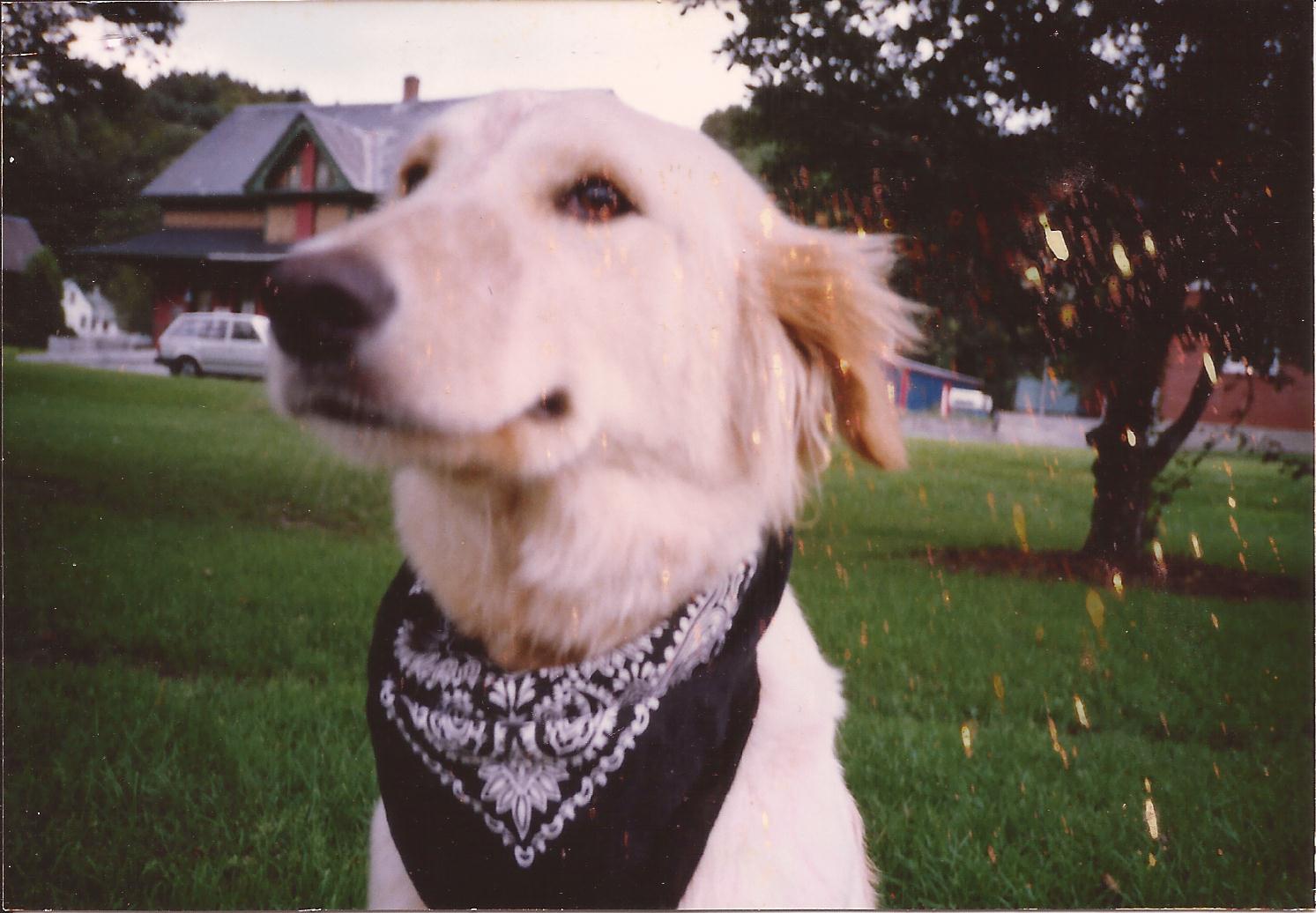
I moved to Vermont, adopted a dog, eloped with my life-love, and started law school, all in August of 1988. We met Margaret, a goldie-lab mix a week before we eloped. I always thought that adopting Margaret helped seal the deal. We had already done one impulsive thing, why not do another?

The dog was Duffy’s idea. I am innocent of any manipulation, or, can, at least, feign the belief that she really did love me more than the dog. Duffy saw Margaret’s gentle, hurting spirit and said, “What about this sweet, girl?” She wasn’t barking, had eyelashes and little dreadlocks around her ears. She came out of the kennel, sat up on her hind legs and wrapped her front paws around my leg in a hug.

The Upper Valley Humane Society on the Vermont / New Hampshire border, told us all about her terrible life. Margaret was about three and recently had puppies. It wasn’t her first litter. She had been chained next to a garbage heap, so mostly she had to rummage for scraps. They said she would take a lot of work.

Duffy did almost all of that work, while I “studied” law but it was easy and done with an appreciation that Margaret was giving her something special in return. Margaret went swimming in the River, fetched sticks, took good long walks every evening and hikes on the weekends. Duffy took her on errands and to parties (where Margaret would offer spiritual counseling), so people could tell her what a special dog and how beautiful she was.

In later years we moved four times and had three babies. Margaret was a good sport but none of that was easy on her. In my book, all dogs are measured against Margaret and none have made the grade, particularly, this current crop.

We put down Margaret, then, Sam and Lily, who had come to us as old dogs in search of a peaceful end of life. All three within five years. I, being the designated family witness to these events, was excited to have a little dog free time.

Oh, but, they couldn’t stand it.

Duffy took two of the boys – her covert majority – to “run some errands.” They show up later with a mutt, who they had named Fonzie, bathed, wormed, and vaccinated. The boys called him, “ the Fonzie Dog”, or, as I think of him, a Chihuahua head, grafted on to a Terrier body by Dr. Frankenstein. Fonzie sensed instantly that I hated him, and he, me. He was a demon, ran off all of the time, wouldn’t listen. And he made me miss Margaret. One day, I was off somewhere, and my wife talked to a dog trainer / rescue person. You know the rest.

Soon, she had found a wandering multi-breed in a parking lot. It was incorrigible. If Fonzie was a demon, this dog was the spawn of a cucachabre and the devil himself. He kept trying to run away and I said let it go. No one spoke to me for three days. That dog, I was told, needs a home and Fonzie needs a brother. The thing had a name but I will consider myself lucky, if during the writing of this, his name does not pop back into my head.

Well, they became quite the criminal enterprise, Fonzie and he who shall not be named. They committed vandalism and mayhem. Eventually, they took off together and no one could find them. Everyone knew Fonzie was being led astray by that no-name asterisk of a dog. Seven bleak days around here ended with a 4 a.m. call from a neighbor. Fonzie was 3 blocks away with a broken hip. There was no sign of the other. It was the greatest day of my pet owning life.

A couple of months later, someone put up posters, “Found” with a picture and info. I think it was Jonas who said, “Daddy that picture looks like…” The other two boys faces went white, but I knew they would never tell. At last, I had the majority! Then a couple of weeks later, a woman was wrestling a whirling dervish across the mockingbird bridge. My heart skipped a beat, because you can feel it when you are close to true evil.

“Don’t make eye contact,” shouted Liam.

“Hide!”, warned Caleb. The older boys, the ones who had aligned with me on this issue, stared over the top of the seat at the woman and the dog until we had driven well past them.

“Dad, that was…” said Liam.

I cut him off quickly, “NAHHHH, he was smaller than that”. No one ever said another word.

After the broken hip and 7 days on the road, Fonzie and I made our peace. I admitted that we really missed him and he admitted that he had, at times, been ungrateful toward me. He said he appreciated that I was the person who came and got him and he apologized for following the anonymous vagabound and all of the pain he had caused the family. I accepted his apology and we have been on very good terms since.

Then, along came Buddy, some sort of very hairy Shepard, because, you know, Fonzie needed a brother. I looked at my wife like she had lost her wits. Didn’t we just try that with Phantom Dog? She says, I found a dog but you get to decide. Of course, when I met Buddy, I was absolutely emphatic.

“Oh, he’ll do. Come here, buddy…”, I declared, mustering my bitterest condemnation of the whole proceeding! After that I just sort of gave up.

Fonzie was better and a comfort to me at times, but Buddy was the other extreme from that forgotten, little tramp. I have never seen a dog worry as much as Buddy does. It’s understandable though. He was abused and separated from his brother. Every time he tells me that story, I just tear up. He hasn’t gotten over the time I told him about Margaret’s life and that he better buck up. I should have been more sensitive.

I don’t know how much time passed, maybe just a few months. I remember there was at an epic heat wave. It was between 100 and 107 for about 40 straight days. Somewhere in there, I became vaguely aware that the family was beginning to worry about animals generally, in a drought and heat situation.

That concern became quickly focused on the specific instance of a wild or dumped beast currently circling our neighborhood. Again and again he passed the house. Each time, I could see the call to arms rallying the troops! I on the other hand, observed from the garage. The thing was a mottled mixed breed. It looked like a hybrid of Alien, the ever popular pit bull, and a black lab.

Rescue people will probably scorn me, but I only like to rescue Dogs that come up to me and ask for help. Like Margaret did. I saw this dog, he saw me, 15-20 times over two days. I even called to him but in his core he believed he was better on his own than to take a risk with me. Dogs today are worse than Human Beings about that false pride stuff. If you need help, ask. Otherwise, I have a garage to clean.

The only family member who had the courage and the persistence to see this rescue through was Jonas, our youngest. My wife is so clever. She sends a small child out to tame a pit bull. Day and night he put out food and water. The dog, very cautious at first, then slowly trusting, ever so slowly building trust… finally, let Jonas pet him. Next thing I knew, “Zeus”, was in the house watching TV and acting like a poodle.

So this merry trio – the aging, but still spry, Fonzie; the neurotic, sheep-less, Buddy; and Zeus, who has bitten 5 or 6 of our friends, all of whom claim they deserved it – has been doing fine together now for a number of years.

Last Saturday, Duffy comes home with some sort of terrier looking mish mash. I gave her directions to a place and she said, “Oh you better not send me that way, I might pick up a stray dog.” I had a sinking feeling as she pulled out of the driveway.

Did I mention my wife is psychic? Not an hour later, she was stalking a stray in the rain in Oak Cliff. She says we are fostering him and she will find him a home. By the time she got “Beckley” home, he had a name, his shots, a shower and shave, and an appointment for a nut clipping. She says we are fostering him and she will find him a home. He doesn’t look like he is going anywhere to me.

He is an agreeable fellow though the other three dogs hate him. They are highly insulted that we are not trusting their judgment on this one. Zeus is so upset we have not even let him near the dog without a fence between them.

I prefer someone adopt Zeus, and would pay them to do so, as I am growing quite fond of “Beckley”. He is all black with just occasional white spots and appears to be very smart. He has a tiny strand of longer white hair near his rectum. It looks as though he might have a string hanging out of his butt and people have commented on this.

Beckley (or Zeus!) clearly needs a patient group of humans who have their own flaws and foibles. So, if you know anyone who wants a man killer, or a smart, sweet, little dog that’s sure to start a conversation, just let me know. That or I’m stuck with the very real possibility that for the next 10 years or so, I may find myself repeatedly saying the words, “No, that’s not a string. No it’s not hanging out of his butt.” This is how a rescue dog can open the world for us!

Image

6 Comments

Filed under Uncategorized

Casa View

Writer’s note: This is my tribute to a place that never existed before, shined brightly for 20-25 years, then, faded slowly over a decade, appeared dead, and, now, enjoys a vibrant renewal.

Image may contain: 3 people

In Spring of 1967, my mom announced we were moving to an apartment. We had been in a sort of economic freefall in the years since my parent’s divorce, but we had never lived in an apartment.  My mom said we needed to move to the apartments to “save money”. It was hard to tell how bad our situation was because my mom did have her “Mother and Daddy” close-by.

“Giggy and Boop”, as my brother and I called them, never let on that they, occasionally, helped us get by but it was obvious enough that my mom struggled to make ends meet on her teacher’s salary alone.

We caught mom mixing whole milk with powdered milk, so that the large glass jug of milk stayed full for a couple of weeks, until she could buy another gallon and begin the dilution process again. For the longest time, I just thought that milk started to taste really bad if it sat in the jug a long time.  Sure, we cut a few corners but I never felt poor until I found out we were moving to an apartment.

Strangely though, I still managed to get a Daisy Winchester BB gun, a new bike, “Sgt. Peppers Lonely Heart’s Club Band” and Peter, Paul and Mary’s, “In the Wind” for Christmas, 1967. These presents were underwritten by my grandparents.

I would have preferred to live in a tent in my grandparent’s backyard in Casa View, rather than move again. Casa View, a Dallas neighborhood of smaller to medium sized brick homes, built in the late 40’s and 50’s, surrounds the sprawling Casa View Shopping Center.

My grandparents moved to Casa View in the mid- 50’s from Midwest City, Oklahoma. In Casa View, they bought a 1,160 sq. ft. home. It was a 2-1-1 with a den and living/dining room and a large backyard. The “Den” in that floor plan was used by many of the new residents of Casa View as the third bedroom. Those who didn’t have a bunch of kids growing up in those compact bungalows had the luxury of making eleven hundred square feet look like the Taj Mahal.

I always thought my grandparents were “rich”, with their comfortable house, new car every two years. The backyard with it’s bird bath , lush, high hedges inside the chain link fence,  plum trees, flowers, and the Mimosa tree, that grew as fast as the boys who were climbing it, had the feel of a place in the country.

My Dad and Mom, seeing the nice life my grandparents had in Casa View, moved us to Dallas in about 1958.  We lived in a rent house on Province Lane and, then, about a thousand feet away in a rent house on Larry Lane. My Dad insisted on the move to save $10 a month in rent, before my parents bought our home on San Lorenzo.  All three of those houses were in Casa View, all within two miles or so of my grandparent’s house.

I suspect my mom had doubts about the security of life with my dad and was, perhaps subconsciously, building an exit strategy, if one became necessary. When they divorced, the house was sold and mom, my brother and I lived in two duplexes between Casa View and Casa Linda, an older and, generally, more prosperous suburb, still not more than a couple of miles from my grandparents. But, we always considered ourselves more Casa View than Casa Linda.

The center of the Casa View neighborhood was the shopping center, which featured lots of convenient parking and the friendly, small town atmosphere, with big city conveniences.  Giggy and Boop’s home was one house from the corner of their street, Dunloe, and Dalehurst.  Dalehurst connected the neighborhood to the shopping center parking lot, between the A&P grocery store and the Goodyear Service Center.

That opening, now blocked by a newer Wal-Mart, was the convenient gateway into the Casa View Shopping Center for adults and adventure seeking kids. Despite warnings not to “roam off”, the allure of the shopping center was too great. We wandered the toy aisle of the five and dime, watched the mechanics at the Goodyear work, or, if we were lucky, the appliance store would have sold a refrigerator and left the big box in the alley.

A boy with a refrigerator box inspired hours of fun, including the time it took to drag the thing back to the house. Before people felt the need to rent bounce houses for birthday parties, it was considered perfectly acceptable to give a bunch of kids a refrigerator box and see how much fun they could invent with it.

Casa View Shopping Center, was a huge complex surrounding the major intersection of Ferguson and Gus Thomason Road. For the late 50’s and all of the 60’s the Center had three gas stations and three stable grocery stores. Wyatt’s Cafeteria, Irby’s Restaurant, Youngblood’s Fried Chicken, Fred’s BBQ, Orlie’s Hamburgers, a soda fountain at the pharmacy and Lone Star Donuts, provided delicious eating out choices.

There was a photographer, barber and beautician, dentists, doctors, and a realtor. I don’t believe there were any lawyers in the professional building area of the Center known, to most, as “the Arcade”, because people had no need for lawyers. Divorce was not yet common and there were few disputes that couldn’t be settled by simply walking over and having a conversation.

There was Casa Jewelers and Brad’s Jewelers, Red Goose Shoes, Dad’s and Lad’s clothing store, and C&S Hardware.  There was a post office, bank, laundromat, dry cleaner, paint store, a  M.E. Moses, Penny’s and  Sears. The bookmobile came every couple of weeks and, later, a library was built.When the library first opened, so many people were visiting that they put a limit on the number of books that could be checked out. Later, my brother used to walk more than two miles, every 10 days, with a stack of books to and from the library. He was not unusual. Casa View was the new American small town on the edge of Dallas, a suburb where people hungered for all of the promise of the American Dream, placed on a black-land prairie where cotton fields had once flourished.

Casa View had great schools and as the neighborhood grew, new wings were added. Teachers taught in the same schools for years and became part icon – part myth, as each class added to the lore.  In those days, everyone joined the PTA, and many attended the meetings. The schools provided sports outlets, especially football. When Life Magazine did a picture story on schoolboy football in Texas, they came to Casa View. There also was culture and the arts – school plays, talent shows, and recitals, even at the elementary level. There were piano and string lessons during school. Art class and field trips to the Dallas Symphony.  There was a film room where students could see what life in other countries was like, long before television showed us, courtesy of Encyclopedia Britannica films.

In elementary school, we took Spanish on “Educational TV” and even had a ten minute period, once a week, on Friday, when we had “bank day”. We learned the value of saving money and put money into junior savings accounts. The schools were for far more than education. They socialized kids and taught citizenship and life skills. Together with the churches, Scouts, DeMolay, Rainbow girls, 4H, Boys State, Key Club, Junior Achievement, and others, all helped keep American values and personal responsibility firmly ingrained as cornerstones of a vibrant democracy, simply by being neighbors in a neighborhood.

The community wisdom held that those who were intellectually curious would be taught and pushed to excellence.  Those who were lazy, or less able, would catch what they could and be “socially promoted”. It was understood, even respected, that not everyone was going to college and there were work programs and car repair competitions and metal, wood, electrical, and plastic shop classes at the high school to help prepare a prosperous working class. The community wisdom, which has been proven true over and over, said that everyone was good at something. We didn’t all have to be good at the same things.

In Casa View, we were grateful for every new service and small business that opened that kept our lives convenient.

There, in Casa View, we enjoyed weekend hamburgers in my grandparent’s backyard, card games with the family and friends, and the sharing of old stories. We listened to the music of 101 Strings, Glen Miller, and Herb Alpert and the Tijuana Brass, playing on Giggy and Boop’s new Magnavox console stereo cabinet with the “Spanish American” finish.

With Giggy and Boop, there were fishing trips to Lake O’ the Pines, beach trips to Padre Island, and day trips to Texins Rod and Gun Club, near McKinney, for target practice with our 22’s. We traveled to Kansas City by train from the little station just a couple of miles from Casa View on the edge of Garland.   We dressed up for church. We dressed nicer than normal, for our annual visits to the Sports and Vacation Show and the Boat Show. My grandparents provided that place that was normal and, at the same time, idyllic. Something good was always cooking. There was always love, laughter and community.

Giggy and Boop did not coddle me, though. There were always chores to be done and I did yard work for them when I was old enough.

David Grunden and Jimmy Dixon were generally my accomplices when I visited my grandparent’s house on Dunloe.  David once described to Jimmy and me, how he shot a blue jay with his BB gun from the range of about 80 feet and this seemed too fantastic to believe. I had no real knowledge but had shot friend’s BB guns and 22’s many times. I could always see the BB as it shot out the end of the barrel and sped toward and, usually, high or low, left or right of the intended target, even at fairly close range. At any rate, I believed, 80 feet was an impossible shot.

This conversation escalated to the point where I challenged David to shoot me in the rear-end, from his driveway, while I stood in the driveway of the house next door, a distance of maybe 60 feet. Not only was I sure that this would not hurt, I doubted David could hit me. Jimmy stood nearby, gleeful, not the least squeamish about what was about to happen. Once we had negotiated the distance, I bent over, presenting the target, hands on knees, looking down the street. David was a good kid and he offered to cancel the firing squad, “Are you sure you want to do this?” he asked.

For the 49 years of my life, since this event, anytime, anyone has asked me, “Are you sure you want to do this?”, I have paused and reflected, making sure that there was absolutely zero chance that,   by answering “Yes!”,  I could possibly experience anything close to the intense, screaming-through-the-neighborhood, burning agony, of a BB to the butt at 65 feet.Image
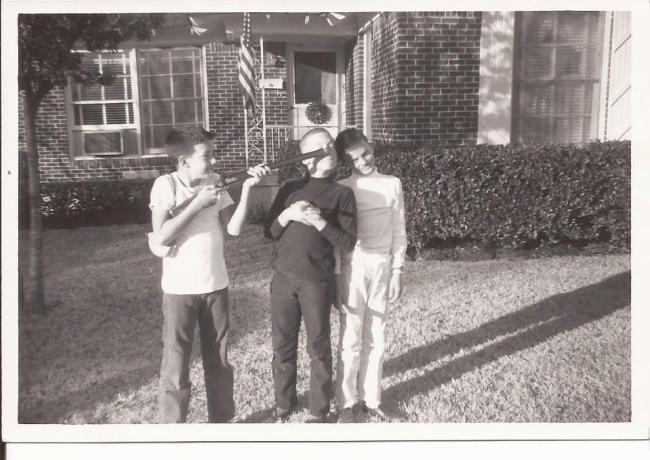
They said I looked like a rabid dog, jumping and wailing and spasming, trying to get away from the white-hot, load of coal, dropped down the back of my pants by a tiny ball of steel. People ran out of their homes to see what had happened. Tears streamed from my eyes as I staggered and seized in anguish. I saw confused and sympathetic faces, yet, all I could do was try to get as quickly as possible to Giggy and Boop’s house. David was right behind me and I heard peels of disbelieving laughter from the neighbors as he babbled, “I shot him in the butt! Are you alright? Oh I told you…I’m sorry! Are you alright? I shot him in the butt…”

Having heard me coming, my grandmother emerged from the backyard and her stern look offered no hope of sympathy. Giggy was of Scot descent and she did not suffer fools lightly. “You shot him in the butt? Why, David?” my grandmother asked of David, sympathetically, as though she was sure this was a justifiable shooting on his part.  “Because he told me, too!” David offered. My grandmother recoiled as if stupidity had just popped out of a jack in the box. She grabbed me by the neck and dragged me into the house, where I had to suffer the humiliation of showing her the flesh wound.

When my grandfather got home, my grandmother fixed a “highball” for both of them.  I heard them in the den, with the door closed, howling with laughter, like the rest of the neighborhood did for years. I think it was the next Christmas that I got my own BB gun and Boop took a keen interest in making sure I knew how to use it safely, “And for god’s sake, son, don’t shoot anyone in the ass…” he mumbled at one point.

As soon, or even before, people started building homes in Casa View, they started building churches. My grandparents were charter members of St. Mark Presbyterian Church, which started out meeting in a military surplus quonset hut, and later built a sanctuary, a kitchen and classrooms. As the church grew there were additions. The St. Mark members were the most wonderful, kind and caring people you could imagine.

For several years, our pastor was John Danhoff, a man who had polio as a child and walked with crutches. He attended Yale and would throw batting practice to the church baseball team. Though he could only use one crutch to help balance, he had amazing strength and accuracy. He threw the ball faster than we were used to, but he grooved it right down the middle so we could relax and just swing at the ball.

He knew a lot about pop and folk music and quoted popular song lyrics in his sermons. Mr. Danhof was the kind of preacher that made you glad your parents made you go to church. He dropped in to our occasional, weekend, youth fellowship parties. He visited with the parent chaperones and then, told us all a funny story about Jesus, well, he made it funny, or about having polio or some experience he had in college or divinity school. As he exited the party, he would say something like, “Remember, if you were a Baptist, you wouldn’t be dancing right now!”

John Danhof was warm and funny and didn’t preach to the youth, so much as he led by example. Our fellowship groups taught us much about faith but also about service and took us outside the safe and comfort of Casa View. The first time I ever helped the homeless, the first time I visited a home at Christmas where there was barely enough to eat, but there was a family with a bible and a piano, Jon Danhof led me to those experiences.

Area churches started the White Rock Churches Athletic Association. Over the years, thousands of kids and adults enjoyed the fellowship of baseball, softball, and basketball.  The City’s baseball fields at Winfrey Point, Norbuck Park and Harry Stone and many other fields, were booked solid with games. Families enjoyed gathering after a game in the darkness of the parking lot in late spring and early summer, where one of the parents would open their trunk to reveal an ice chest full of cold drinks. This led to burp contests and laughter about some crazy play in the game where a kid hit an infield home run or got caught sitting down in the outfield. We would hit each other with our gloves and hats and chase each other with spear grass while the parents chatted. Fireflies danced in the woods and low places and, soon, we all drifted to our cars.

On the way home, with the windows rolled down, cicadas buzzing, and honeysuckle in the air, my mom would always stop and let me buy a hot link at the 7-11 on Peavy.  We loved the manager of that store, Mr. James “Jim” Baldwin, even though I had been in trouble with him once or twice before. A kid who got in trouble a little was no problem to Mr. Baldwin, as long as you didn’t steal from him.

Once, Billy Dollahite and I bought cigarettes “for our parents”. However, Mr. Baldwin noticed us heading toward Reinhardt Elementary, instead of toward our homes and dropped a dime on us. Imagine our surprise, as our mother’s drove up to the Reinhardt elementary playground and there we sat, 8 years old, in a Bois d’Arc tree, puffing on a Salem.

The first time I ever heard the expression, “It takes a village to raise a child.” I thought of Casa View, Mr. Danhof, Mr. Baldwin, Giggy and Boop, the teachers, Scout leaders and coaches, and most of all my Mom and Brother, who most likely steered me clear of prison.  Casa View, as a neighborhood, had everything anyone could need, including a few guardian angels, and embodied the stability and happiness, longed for by a post-depression, post-WWII folk who wanted nothing more than to live free of want and tyranny.  In Casa View, they did.

47 Comments

Filed under Uncategorized

Affluenza

Note: A rich, white, kid, one county over, gets 10 years probation for killing 4 people and crippling another in a DUI accident. A poor, black kid gets 10 years for killing 1 person in a DUI accident, from the same judge. Listen people, probation is no sweet ride. It is a terrible punishment paying all of those fees and the inconvenience of having to report every month to surly probation officers who look at you like you were, you know, a criminal.

I definitely believe in “affluenza” (rich kid’s syndrome) but, I certainly don’t believe it should be a “defense” or a “disease”. I was thinking more like a malaise, for which. the punishment should be “shoot on sight” and “aerial spraying”.

Do I understand the concept correctly?: The Rich lawyer (a poor defendant could never afford) finds a Psychologist. The Psychologist – or was it a psychiatrist? – is probably rich, but rich and famous nevertheless, after this trial. Poor Kids do not have psychologists. They defend the Rich Kid, using a previously unnamed cultural defect that nurtures children who disregard human life because they are just too rich. Bulletproof, corrupted, by wealth and privilege. The Rich just can’t be trusted to raise proper children. What the left says about them in “ad hominem” attacks is really nothing compared to what the Rich will say about themselves to avoid a little prison time for one of their own.

I wonder if this judge has a record of “second chance”, rehabilitative probations, with long, stringent, monitoring and reporting, regardless of their economic position. If she is consistent with these kinds of sentences then, really, I don’t have a problem – in fact, I respect it. That is the intention of juvenile justice. According to retired Judge, John Cruzot, the juvenile system is set up to achieve rehabilitation. Be that as it may, it doesn’t explain the disparity in sentencing in the cases above. Rehabilitation for some and hard time for others.

The illness of affluence afflicts not only Rich Kid behavior but, apparently, the rest of a system that simply can’t see its own class/race biases.

Comments Off on Affluenza

Filed under Uncategorized

Older

Note: Deep breaths here as I post a poem. That’s not usually my comfort zone, but because of people like my brother, Jay, the encouragement of friends, especially Tony, and my love, my wife, Duffy, I am finally pursuing my long neglected love of writing. Realizing that the poem below may possibly be the worst kind of schlock or just not very good is not really as important as just the act of hitting “Publish Post”. Reconnecting with my creativity, and working hard to sharpen it, requires a certain, previously lacking, fearlessness in the face of failure. One needs to know and have slapped into his thick head, his absolute limits as a writer. I think I have a chance to learn my boundaries and be a pretty good writer by the time I am 70 or so. So, please free to comment below. “Not My Cup of Tea.” is as helpful as, “Meh.” Consider carefully whether or not you ever want to see another piece of poetry of mine again, before handing out any compliments. That could be really dangerous. A good winter, to you and yours.

The Bowing

by Jeff Veazey

Winter is winter, until it becomes a number.

This one is harder,

like the first unyielding winter up north,

like the snap of a limb of an old friend.

Falling ice, empty shelves and gas pumps,

the loss of power.

We worry about the birds – and the bees.

Remember the ice storm of ‘76?

That one was worse-

it was easier, but it was worse.


2 Comments

Filed under Uncategorized

Happy Campers

Let me tell you, you ought to be more careful about the way you use that term, “happy camper”. I am not a happy camper and I’ll let you know when that changes.  In fact, I don’t want to be a camper at all, especially in my own home.

There are trained professionals, men and women of daring and determination charged with the job of restoring folks to happy camper status and I ran into several of them in my alley just awhile ago. Public Utility Service employees out of Corpus, drove 8 hours and went right to work helping restore electricity to almost a quarter of a million North Texans.   

“Well, at least we can get some happy campers over here on these two blocks,”

I heard of one the out-of-towners say. He seemed to motion toward my block. I wanted to interrupt and ask the one question they hear a hundred times a day in situations like these, “HOW LONG WILL IT BE?” Instead, I kept a respectful distance. There was purpose to their movement and discussion and it was not something you would ever want to interrupt. They were serious and did not dawdle. They were weathered and wore work jump-suits, helmets, boots and gloves, but appeared professional in every way.

They were discussing “Plan B”. Their original plan for the 4-5 block patch of houses surrounding me on three sides had hit a snag. Our outage was a big job – lots of limbs on wires in the alleys, blown transformers, and meters and service wires snapped off of the side of houses from falling timber. Their “saw truck” had been diverted to another area for a couple of hours.  However, it was immediately apparent that these are not people who ever say, “Uh-oh, this is hard, let’s go home.” Assessing that they could do some but not all of the area until the saws arrived, they immediately made a plan to restore the areas where they wouldn’t need saws.

It’s all on the national TV news and, if I had power, I could confirm that Dallas is in the midst of a mean winter storm. Here it is early December and it is acting like its February. I have lived through crippling North Texas  ice storms and been without electricity for longer periods during and after other storms, but it has been a long time since we have lost power for more than a couple of hours and suffered the extreme cold and wind chill that this storm brought.  My dear wife reminds me it was really cold and we lost power for 2 plus days just a few years ago. Isn’t memory loss a symptom of hypothermia? I guess I am learning what they mean when they say this kind of weather is particularly hard on older people. Every storm makes you feel a little older.

A friend of my wife’s, from Minnesota, wrote on Facebook before we lost power, “-2”.  People will laugh and say, “Oh Dallas, why don’t you try a real winter like we have in Minnesota or Alaska?” Having lived in Vermont, I know what real cold is, but the people, homes and infrastructure in Texas are geared for the blast furnace of June – August, heat that would bring a North Dakotan, who doesn’t even own an air conditioner,  to his knees.  Last night, my bride and I sent the last of the nest dwellers to a friend’s house and hunkered down.  We built a cozy den in front of the fireplace and the three dogs circled in.  We listened to the battery powered, hand-crank radio. We danced.  We ate soup. When we woke at 3 a.m. the temperature outside was 18 and the wind chill was about 0. That’s cold anywhere, if you don’t have heat. Our fire was very low, so I got up and threw on a few logs. With the flashlight I could see the heavy frost of my breath and could feel the frigid draft around the fireplace. Yet, we survived and the dogs thoroughly enjoyed it.

We were not as enthusiastic about a second night of roughing it and came home to get provisions for an overnight stay (though we had heard rumors it might be 5 days before electricity was restored) when we saw the trucks had arrived. The sight of trucks and emergency lights and workers combing the alleys reminded us that when there is real trouble, people, will come. Help will arrive.

My wife put this on Facebook with her phone, you know, since everything else is cold and powerless:

“Here are some of my gratitudes I have on day two with no electricity on a very cold day In Dallas, Tx…My fireplace, my husband still cooking cuz we have our gas stove, my friends who have offered their homes , our great neighbors coming together, our three dogs who slept with us and kept us warm, laptops to watch movies, our great sleeping bags, the fact that our trees didn’t fall on our cars or house ( like our neighbors), my upbeat husband, my hot shower this morning, clean underwear, working flashlights, our crank radio, really great hot coffee, and our health. “

To that, I would add a gratitude for the people who come out in frozen weather when the rest of us are scrambling to get inside and get warm. It takes a special person to come out in the worst weather situations to risk their lives to help people have light and comfort in their homes.  As far as first responders, Public Utility Service workers get far less credit than they deserve.  I, for one, have discovered a deep and profound appreciation. In a little while my lights and heat will be back on and I will probably sink back into the “take it for granted” mindset. I hope not, but we are human. In just a week and a half the whole gang will be home for the holidays. There will food, warmth and joy. I will try to take a moment and send a prayer of thanks toward the people from Corpus and or anywhere else, where there are people who get a call in the night to chase the path of a tornado or hurricane or winter storm,  in hope that they are home with their families, warm and dry, and joyous and the one’s who are working somewhere can get home soon.  The next time there is a natural disaster I’ll think of what Mr. Roger’s said:

“When I was a boy and I would see scary things in the news, my mother would say to me, ‘Look for the helpers. You will always find people who are helping.’ To this day, especially in times of ‘disaster,’ I remember my mother’s words, and I am always comforted by realizing that there are still so many helpers — so many caring people in this world.”

That, was last night. Today, my electricity is on and the house is warm. Some of my neighbors are, not yet, so lucky. Around the neighborhood, I can hear the “Beep-beeping” of trucks backing up and saws clearing the lines, creating happy campers, one block at a time.

1 Comment

Filed under Uncategorized

A True Story (if ever I told one)

jducabbie

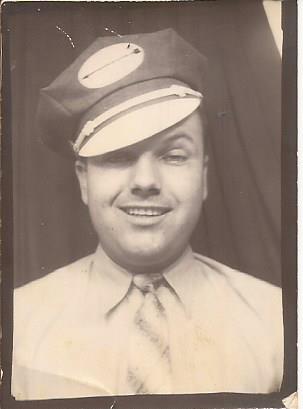
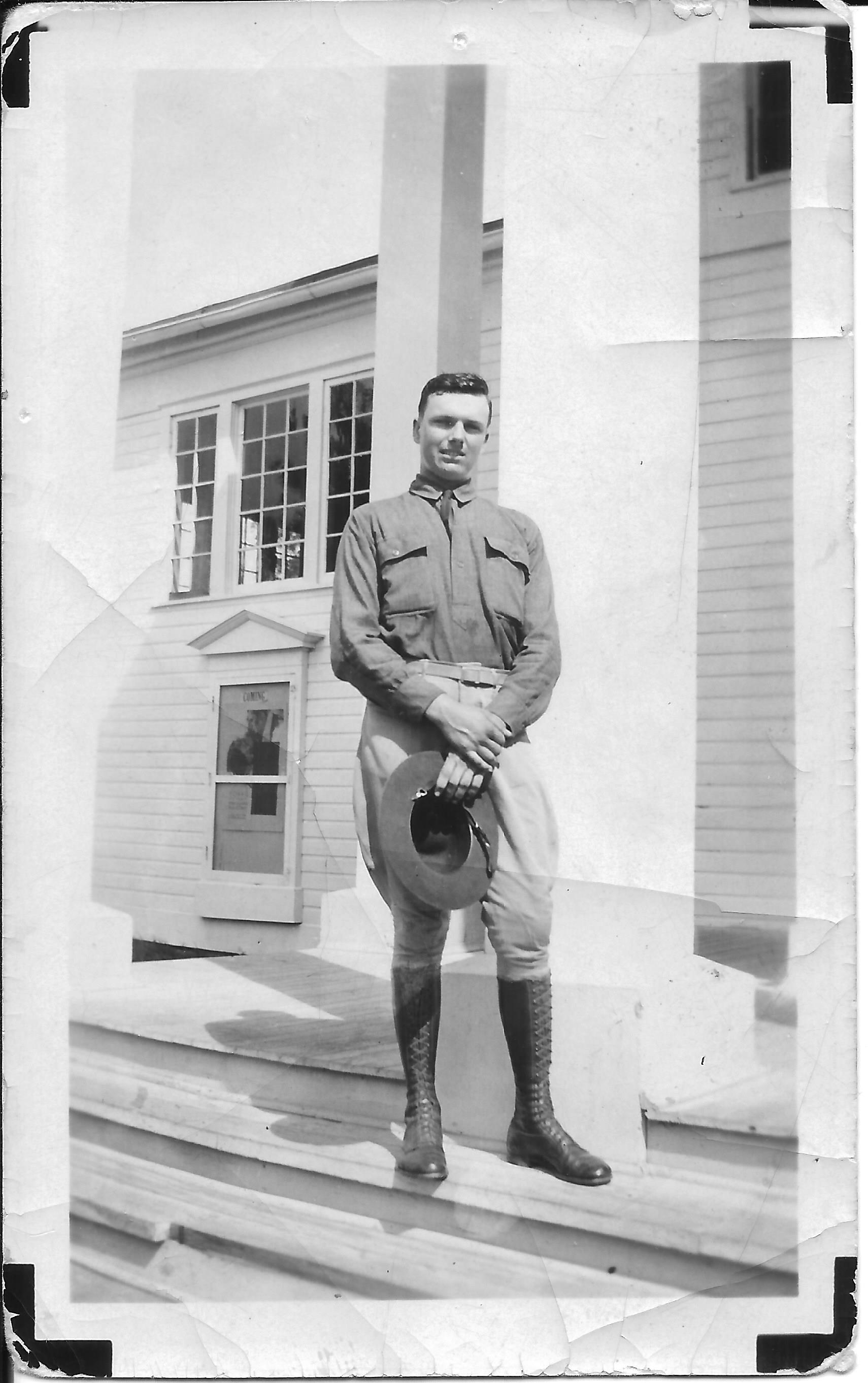
After his first hitch and before WWII, Dad drove a Cab during the Eat Texas Oil Boom.

judsoldier

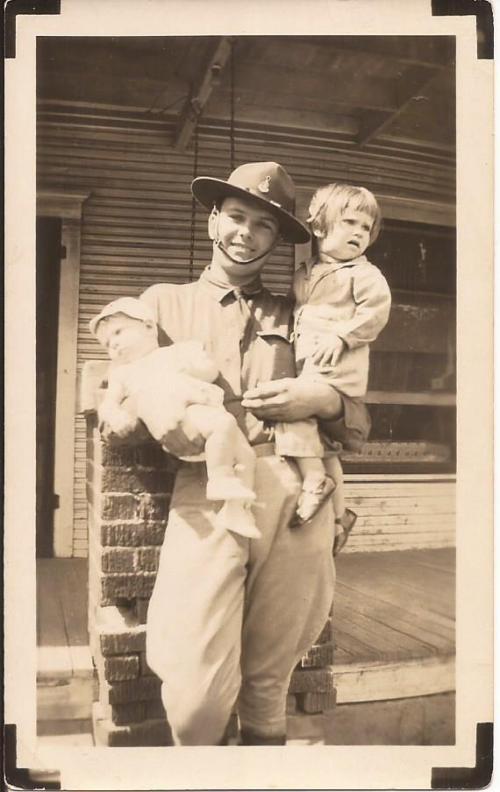
Dad 15, home on leave with niece, Barbara, and nephew, Gene.

dadandmelasttime

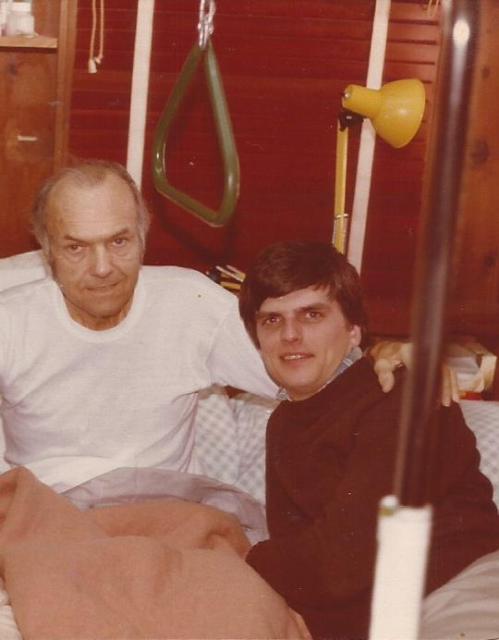
One of my last visits with Dad before he died in 1982., fall of

dadfamily

I have written about fatherhood before in this blog and this mysterious relationship continues to inspire me to understand. One of the wise men talking to Bill Moyers long ago, (Was it Robert Bly or Joseph Campbell or both…?),  commented the problem with fathers and sons occurs when they both realize they are in love with the same woman.  One of them also spoke about the cultural shift of the 20th century that took men away from real, meaningful work and gave them far more money for far less spiritually rewarding work.  This caused their children to see more of their rage than in any previous culture since the barbarians.

Although I might have had better reason than most, I have tried not to see my shortcomings as something caused by my father or anyone else. The mind wants absolutes and yet, there are very few purely good or purely bad people. There are people and they are just all over the place in how and why they make certain decisions. Through the years my brother and friends and even strangers have drifted into long conversations about our fathers. The men who became our fathers grew up in the depression and fought in wars. Poverty and War prepared the men of my father’s era for work and survival and not to be “emotionally present”.

There were a few dads who I thought were terrific, like my grandfather, Raymond Barlow,  and  some of the men from my church, or Mr. Peppermint, who I wrote about in a previous blog piece, and  but they were the exception. My Dad, to put it gently, was not the model of fatherhood portrayed by the stars of the TV shows I watched as a kid. There were fathers on TV like my Dad, but they were the ones played by great character actors as tormented, insecure, prideful, Dads wracked by sorrow, guilt, disappointment or sin. These Dad’s were straightened out and offered salvation by Matt Dillon, Ben Cartwright or Lucas McCain, et al, over the course of an episode. If only life were so neat and tidy.

I was lucky, though. For whatever reason, I had a knack for deterring or distracting my Dad’s grouchiness and quick temper.  He was not particularly violent but his demeanor suggested he certainly was capable of it, if you pushed too hard. He was insecure around people who had more education than he had and was a bit of a bully. Like the loyal kid of those rotten, TV-dads, I played the role. Deep down, even as a young child, I had this wiser-than-my-years understanding that my Dad loved me, but that he just had a lot of problems that weren’t my fault.  People have told me that I could defuse him with a smile but I remember my fair share of trepidation, quickly judging his mood and, if necessary, heading out the back door, as soon as he got home from a day of selling cars.

I know that things were much harder for my brother, six years older and more sensitive, and our Mom, who seemed to me to do all she could to shield us from Dad’s dark side, though my brother certainly has a different memory. Emotional pain can never be a shared experience. Each person’s experience is so different from another. It is not a knife, or acid, or fire, or a punch to the gut. Yet, we feel cut, poisoned, burned and like the wind has been permanently knocked out of us. Emotional pain gnaws and bores in, and each is left alone to interpret, endure and come out the other side.

So we, my brother and I, have our own story of Dad, and I couldn’t begin to tell his. Our stories are quite different based on the filters of consciousness and memory and the difference in our ages and personality.  But, my brother and I both remember the terrifying argument that woke us from our sleep in the fall of 1961. We both remember the gun, laying like an ashtray on the nightstand, and our father’s low, hateful, growl, like an enraged animal, “You can leave, but if you try to take the boys…” and the implied threat of his menacing glance toward the gun.  I didn’t remember much at all after that, like a concussion, everything moved slowly, out of focus and in black and white. Then, after the divorce was final, my memory recovered. Life was never really the same and everything, where we lived, how people looked at us, our self-esteem, was shaded by “the divorce”.

So between the divorce, the “Meth”, prescribed for my hyperactivity, and the Kennedy assassination, there were a few years there where I just disappeared into a rich fantasy world. (Also, described in the Mr. Peppermint blog piece) For several years, I saw very little of my Dad. I looked for him, thinking he’d turn up or that he and my mom would reconcile. Once, he gave my mom, my brother and me,  a ride when my mom’s car was in the shop. I remember asking my brother, “Are Mommy and Daddy making up?” He looked horrified and, then, sympathetic and said, “No. No they aren’t.”

During this time, I became quite the story teller. A psychologist would say I was crying out for attention but, honestly, I just thought the stories in my head were more interesting and full of possibility than the life I was living. Willie, our once a week domestic worker, would say to me, “Honey-child, are you tellin’ Willie a sto-ree?”  Most often, I was. I remember telling her once, that my mom and her parents were discussing a plan to send me to live on a small horse ranch in Missouri, with my Great Aunt Millie and Uncle Homer, because they didn’t have any children.

“ So,” I said to Willie in a grave tone. “ I might not be here when you come next week.”

There was a long pause as Willie ironed. “Oh-Baby, I might not be here next week if you wasn’t here. My heart might break and Jesus just take my soul.”  This caused me to backtrack quickly. I loved Willie and she loved me and under no condition could Jesus have her soul.  I often “faked sick” on days that Willie was coming so I could stay home and hang out with her. I loved to hear her sing the spirituals while she was ironing.  Whenever I told stories to Willie, I felt bad because she seemed to be closer to God than anyone I knew.

“Well, if I don’t go to Missouri, they might send me a horse down here! We could ride it together!”

“Wouldn’t that be fine!  Willie and Jeff riding yo’ pony all over town!”

The idea of Willie and me riding a horse together made me laugh so hard I got a stitch in my side. I am so grateful for adults in my life who encouraged my imagination and didn’t judge me too harshly when I was lost and trying to find my way. However, there was one story, and still is, that I would tell, that people most often would assume I was lying about, but was actually true.

In 1933, in East Texas, it must have seemed as though there was no end to the misery. The crash of 1929 had followed an almost decade long “cotton depression”. Share croppers eeked out an existence in the best of years but it had been many years since anything resembling a good year.  As poor as they were farm families bonded together in the fields and in church several times a week and helped each other through every hardship. At a time when city people were getting used to having cars, most farm families still used a wagon. While my Dad, whose name was Judson, but was called “J.E.” and “Tiny” as a child and young man and “Jud” later, told what few stories he could recall, in mostly the darkest, saddest, terms. His older sister, Hazel, however, recalled the family as being very poor but not wanting for the most important of comforts, love, family, laughter, warmth and food. Their memories, like mine and my brothers, were separated by some years. The joy my Aunt Hazel could recall was experienced during a time when my Dad was too young to remember. His earliest memory seemed to be when the family was enveloped in tragedy, while Hazel had clear, sweet memories of their mother.

My Dad’s family lived on a farm outside Mt. Vernon, Texas, with a couple of acres to grow food and an additional acreage of cotton to plant, tend, and pick. My Dad was picking cotton by the time he was 8 and working a mule and plow by 11. At the age of 6, his mother died, they believe from blood poisoning, possibly tetanus, as did her infant child, about a month later, of causes unknown.

My grandfather’s mother, who widowed young and raised six children on her own, came to live with the devastated family and care for the children. About a year later, my grandfather, Jesse, found a wife and mother, Oma,  for the four children.  Oma was 18 and half his age. They met through a friend at church, and Oma was known to possess all of the necessary skills but it turned out badly. Jesse had to run Oma’s relations off from the house once, due to their drinking in the front yard. Jesse’s children had never seen anyone drink alcohol. Oma had terrible mental issues and suffered frequent breakdowns. Her rages could last for several days as she threatened to kill everyone. On more than one occasion the children locked themselves in a bedroom while her husband, Jesse, tried to calm her. When the episodes passed, nothing more was said of them and things returned to as normal a state as possible. The youngest child, Eddie Mae, was sent to live with an aunt, as relatives began to worry for the children’s safety. Somehow the family survived.

By the time he was 14 1/2, my Dad looked like a nearly full grown man. “Tiny” was over six feet tall and had the body of a young man who had dutifully, if not enthusiastically, done a lot of daily farm work.  As Hazel tells it in her memoir:

“I remember once, my aunt and uncle and their children were helping us chop cotton.  My brother J.E. was standing and leaning on his hoe.  My uncle said, “J.E., you will never get rich that way.”  J.E. was about ten or eleven years old, but already he was dreaming.  He answered, “The only way I’ll ever get rich in a cotton field is to dig up a pot of money; so why work so hard?”  J.E. was always dreaming of money and made many of those dreams come true, and, as he always told us, “not in a cotton field!”

In those days between the two great wars, in the years when Mao and Hitler were rising to power, the United States Army enlisted farm boys to work with mule teams.  One day, on a trip to town in early 1934, J.E. went to the post office and saw a notice that said the United States Army Cavalry was enlisting “able bodied” men, especially those with experience with work animals, at Ft. Sill, Oklahoma, minimum age, 17. My Dad’s sister, Hazel, against her father’s wishes, had run off and gotten married at 15 and had a baby, “one year and 9 days later”, as she carefully points out.  So when my Dad was 14 and headstrong about trying to join the Army, his Dad decided to let him. The family myth was that they were so poor and needed the money that my Dad sent home every month. There may have been some truth in that, but Jesse had, by then, moved the family in close to Sulphur Springs, Texas where he worked a regular job at the Dairy and farmed on the side. Jesse always worked hard to provide for his family, rendering dead animals and repairing water wells. The Depression was hard on everyone but they got by better than when they worked as share croppers.  The reality may have been that Jesse knew his son was dreaming of things well beyond life on the farm and the Army might help him grow up a little.  Still, there was the matter of J.E. not being old enough to join.

Image

Somehow, my Dad convinced his Dad to write a letter stating that his son, J.E., had been born on a farm, was 17 years old, but didn’t have a birth certificate. My Dad took this letter, some dry food, a little money, a few clothes, and started walking north from Sulphur Springs. He hitched rides on wagons and in cars when he could. The first day, he made it to Paris, Texas, where he had relatives. He lingered a day in Paris, visiting and enjoying the hospitality, and was thrilled to find a ride in a car to Hugo, Oklahoma, leaving Texas for the first time in his life.  The driver joked and said maybe Bonnie and Clyde would pick him up. Bonnie and Clyde had been spotted many times in Northeast Texas. They were killed just a few months later, 200 miles to the east in Louisiana.

At that point in his life J.E. had been in a car less than a dozen times and the thrill of cruising over the Red River into another state was not lost on him. Before noon he was walking and hitchhiking west toward Durant. The third night out, somewhere in the hills between Durant and Ardmore there was a heavy dew . The temperature dropped and a cold frost coated the ground. Cold and tired, he sought refuge in a barn. Inside, the barn was almost pitch dark. He stumbled and felt his way to a stack of hay and began to burrow into the warmth when suddenly there was a terrified scream. My dad screamed back. A fellow traveler bolted upright from the haystack, ready to fend off any attack. In the dark, they spoke to each other and realized they were both in the same circumstance.  My Dad apologized for startling the stranger so and offered to move on. However, the stranger told my Dad not to worry, there was room in the hay for two, and to make himself comfortable.  After walking 20 miles that day and night, Dad slept a deep, long, warm sleep. When he woke, the traveler was already gone.

When he got to Ardmore in the early afternoon, he knew that there were few towns and little on the road between there and Lawton, the city bordering Ft. Sill. The excitement of the trip waned into the sense that he was about 170 miles from home and the gravity of his decision to join the army began to weigh on him. On the edge of Ardmore, he waited, hoping to hitch a ride. Around 3 p.m., a man driving a truck pulled over and Dad asked how far he was going. “Lawton, Oklahoma” was the reply.

The next day, after sleeping at a small rooming house in Lawton, my Dad appeared for induction into the United States Army, almost four months shy of his 15th birthday. The training was rigorous but he was accustomed to hard work and saying,” yes, sir” and “no, sir”, and he quickly became known as a guy who handled the mules and horses with ease.  He liked the money he could save and send home. The food wasn’t bad and he enjoyed meeting people from different places and making friends.

Two years later, he had saved a little money. He had routinely sent money home to his family and Jesse shared it with a number of relatives who might have needed some help from time to time, which caused my dad, the guy who didn’t pay child support, to be revered in his family as the guy who helped everyone during the Depression. After two years, he had received a real world education and he had learned to drive. He had also learned was there was a guy named Hitler and eventually the Army would probably have to fight that guy over in Germany.  When the papers were delivered for my Dad to re-enlist, he hesitated. He had been corresponding by mail with a cousin and there were opportunities, even during the Depression, in East Texas, mostly created by the Oil Boom.  A couple of days later, Dad told his Sargeant, he would not be re-enlisting. The Sargeant was stunned and tried to counsel him on the benefits of service. My Dad was unmoved and, after a couple of stops along the chain of command, he found himself waiting to see the Colonel.

Judson Eugene J.E. Veazey

The Colonel was firm and direct. He knew my Dad was a good soldier and could make a good officer. There was still a Depression on out there and that was something Dad should consider. Then my Dad, a two year veteran of the United States Army, 16 ½ years old, said: “Begging the Colonel’s pardon, Sir, but I’m not old enough to be in the Army.” That was pretty much the end of it. They let my Dad leave without trying to correct the record.  Dad returned to East Texas but not the cotton fields. As best we can tell he did lots of odd jobs, drove a taxi, bought and sold cars, worked in cafes and nightclubs.  Somewhere in there he got married, for the first of six times, had a baby daughter and reentered the Army due to the war. It is unclear to me what the order of events were there

Eventually, he served almost four years in the Philippines and New Guinea. Early in his time there, he met a Filipino boy named Felix. They taught Felix english and he acted as a guide for them. His village also hosted soldiers for wild pig roasts and for awhile they ate food like they had never eaten before. Dad became a Master Sargeant and led convoys of trucks filled with munitions. He admired the brave men he served with and he recalled one who had “jungle rot” on his hands so badly he had to drive and shift the track with only his wrists but never complained.  My father was awarded the Bronze Star for keeping the convoys moving while under heavy shelling, and sniper fire.  Trucks were hit, exploded and  men under his command were killed. There were few real details considering the years he spent there. As most of my friends would agree, the real war stories die with the witness and my Dad held the tradition.

I don’t really know much about my Dad’s youth except the stories that he told us and the stories my Aunt Hazel wrote in her memoir. I am missing the connection to most of his life up until 1965 or so, and that keeps him from being a real person instead of a character with interesting stories. After 1965, I definitely got to know him better but there are still so many holes. Maybe I didn’t ask enough questions. Maybe I missed the content that would bridge his stories to mine and my brother’s. The pain that he created did drive a wedge that we were never quite able to overcome but we worked at it.  I am grateful that there are people in his family who thought of him as sort of semi-saint, a great guy with a big heart. I think it was my brother who said, “It’s good to know he was nice to someone.” That was their story with him. I see it in his sister’s memoir and I have heard it in some of my relative’s memories.  I know the real truth of my story and while it’s different from theirs, it doesn’t make either story less true.

4 Comments

Filed under Uncategorized

A great Olympian: Bikila

I wrote this piece several years back and continued to work on it off and on over the years. It is a flawed piece but the research of Bikila is difficult and it is easy to become too emotional about extraordinary courage . There is so much to tell about Bikila after the accident but this seems like the day to finally hit “PUBLISH” and share my love of Bikila with anyone who happens by here.


Almost in the same instant, the world gasped his name in wonderment:

BI-KI-LA…

In September, 1960, a little known marathon runner from Ethiopia, shocked the world by winning the Olympic gold medal in world record time, running in his bare feet. No Ethiopian, or black African, for that matter, had ever won a medal of any kind at the Olympics. Abebe Bikila won the first by running 26.2 miles in and around Rome on the last day of the 1960 Olympic Games. Ancient cobblestones, uneven brick, and navigating a long, inadequately lighted stretch of the race course, up the Apian Way to near the finish, all gave this marathon course, its own particular personality. To challenge it in bare feet, seemed lunacy.

Imagine the golden sun splashed Roman afternoon. The runners and trainers begin to gather under a tent for check in near the starting line. There is a large park for pre-race preparation. As Bikila warms up, there is contempt in the eyes of some of the other marathoners. Some are amused, some have heard of his times which purport to break word records but are not recognized by any legitimate sanctioning body. They joke about “African watches” and the country’s lack of shoes. They roll their eyes at the probability that a true marathon course could be measured and properly laid out in a place as backward as Ethiopia. Some runners however, sense something else in the quiet African man who seems determined to run in his bare feet.

As the race progresses and the sun sets on Rome, Abebe Bikila moves smoothly from back in the pack to the rear of the lead group. The course is illuminated in parts solely by Italian soldiers holding tall torches. As the leaders pass groups of spectators gathered near the torches, they look at each other in confusion, not sure what they have just seen. Was that man barefoot? Did he lose his shoes? Even the soldiers holding the torches and standing at attention, break their stoic stance and do a double take, to be sure what they have seen. People rush forward and lean over the security barricades, and look again. Bikila is almost disappearing into the darkness, but, as he runs away, they can see the bottoms of his feet – chalky white and iridescent in the torch light. Then he is a toiling shadow, chasing other shadows, until he reaches the next torch and flashes past another crowd of bewildered onlookers and the pandemonium is repeated.

Between the torches there are few spectators, and the runners are alone with the race and the sounds. There is a rhythm in the lead pack as they run together. But now that rhythm is changing as something is pressing them from behind. Fear and defeat are creeping into the hearts of some of the world’s great marathoners, as Bikila is accelerating toward them. Long before they feel his presence, they hear his feet. The sound is so unlike the pitter pat of shoes running on the stone and brick streets, it is a sound like thick leather slapping in their ears. The other runners can no longer concentrate on their own race; they can no longer hear their own breathing or the rhythm of their over strides. It is audibly obvious to them that Bikila’s pace is much faster than theirs, as he approaches them. As he sweeps past and on ahead, their spirits are crushed by how effortlessly he runs and they are left only with the sound of his feet slapping the street, and, then, nothing. The lead pack disintegrates, as every runner Bikila passes faces the crushing truth and falls away. There is only one runner, the Moroccan, left for Bikila to overtake. As Bikila passes him, the Moroccan takes up the challenge and runs at Bikila’s side for a few kilometers.

With just a few kilometers to go in the race, Bikila passes the Obelisk of Axum. Mussolini plundered this sacred tower from Ethiopia in the late 1930’s and moved it to Rome. As Bikila passes the obelisk, he accelerates further, to a near-sprint, burying the last competitor by several hundred meters. As he races to the finish down a long well lit boulevard to the finish line, thousands cheer in a way that people cheer wildly when they are seeing something no one has seen before. They are laughing and clapping and shaking their heads and exhorting Bikila, who is flying, to go even faster, which he seems to do.

After he wins, reporters ask why he ran barefoot. Two stories emerge. Bikila says,” …to show the world that through courage and persistence the Ethiopian people will always be victorious.” This is perhaps a not-so-veiled reference to the Italian occupation of Ethiopia during Bikila’s early childhood and sounds like something the Empower of Ethiopia would write for him to say. When asked about it further, Bikila said he had made a mistake in the timing for breaking in some new shoes. The old shoes were worn out and his new shoes, he worried, might cause blisters and force him to drop out. Bikila revealed that he preferred to run barefoot and did most of his training in bare feet. His coach, Onni Niskanen, preferred that he wear shoes, but Bikila prevailed in convincing Niskanen that he should run barefoot. When asked about why he started his finishing kick in front of the Obelisk of Axom, Bikila gave a runner’s answer, saying he and Niskanen had surveyed the course in the days before the marathon and simply thought that strategically, it was the best place.

Word of his victory sweeps across the continent of Africa and even in places that have not heard of television and do not have radio, the story of the humble, country-boy, soldier from Ethiopia, who raced the world in his bare feet, and won, is told and retold. He is world famous almost overnight, but in Africa, he is like Michael Jordan, Muhammed Ali, Jesse Owens, and Martin Luther King, all wrapped up in one person. If someone utters his name, all who hear it smile and feel the tingle of their own dreams.
In Ethiopia, Bikila is celebrated as the greatest Ethiopian, other than Selassie. Bikila’s accomplishment ranks as one of the greatest of a storied culture and people.
Even if running bare foot in Rome, with a finishing kick beginning at the Obelisk of Axom, is not a political statement, Bikila’s life becomes instantly political upon his return to Africa. Empower Haile Selassie uses Bikila to promote the African Independence Movement. Bikila’s appearances draw massive crowds around Africa. Selassie presents Bikila as the African Ideal.

As a boy, he went to school through the 6th grade and spent a lot of time farming and shepherding. In those days, if you wanted to get somewhere, you walked. And if you wanted to get there fast, you ran. The mail in those days, was delivered by runner from village to village. Boys would meet the runner as he approached and race each other back to the center of the village. When the mail runner moved on to the next village, the boys would race again as far out of town as their parents and work would allow before turning back. It is likely that Bikila developed an early love of running during these days. Living and running at an altitude where the air was thinner gave Bikila’s body a tremendous advantage.

In fact, Bikila was good at all sports, especially soccer, and local games. When he was 17, his older brother helped him to get into the Royal Guard. As part of the Royal Guard, he participates in many sports activities. In 1956, he was 24 years old, and he sees a parade with some athletes with warm-up suits far nicer than his. He asks a friend who the athletes were and the friend tells him they are Ethiopia’s first Olympic team that competed in the Melbourne Games. He decides he wants one of the warm-ups and asks to train with the unit of the Royal Guard that specializes in sports. Two years later, he beats the best Ethiopian runners to win the 5,000 and 10,000 meter races in their national games. He also runs his first marathon, the only marathon he would run before Rome. His time is faster than the existing world record but the event is unsanctioned and therefore cannot be reported as a world record. When he submits the time on his entry for the Rome Olympics, no one believes it is true.

After 1960, Bikila continues to run and wins the world championship in 1962 and takes aim at winning another gold medal at the Tokyo Olympics in 1964. 40 days before the Olympics his hopes are crushed when he suffers an attack of appendicitis and is sidelined for several weeks. The operation does not go well and he suffers a mild infection which slows his recovery. As the team leaves for Tokyo, Bikila is weak and out of shape. He is not sure he can run at all. When he arrives in Tokyo, he is buoyed by the reception given to him by the Japanese. He is a legend in Japan and they have looked forward to his arrival for four years. Bikila begins training with his friend and protégé, Mamo Wolde, the best of the next generation of great Ethiopian distance runners. A few days before the Tokyo marathon, Bikila decides he can run, hoping to not disappoint the Japanese people. This time, he runs in shoes. By the mid-way point in the race, Bikila has taken the lead and goes on to win the gold medal by over 4 minutes, setting a new Olympic and World Record.

After Tokyo, Selassie, gives Bikila a house and a new Volkswagen. Bikila won almost every marathon he ever ran. In 1968, he tried for the gold in Mexico City but he is beginning to have circulatory problems in his legs. He drops out halfway through the race and faints from the pain, but he is proud that his friend and training partner, Mamo Wolde, wins the gold for Ethiopia. Bikila is trying to get well and begin training when he is involved in a car accident that leaves him paralyzed from the waist down. Bikila now begins to participate in para-olympic events and resigns himself to helping coach the Ethiopian distance running dynasty that he and his coach, Onni Niskanen, started.

He is honored at the opening ceremonies of the 1972 Munich Olympics. Many of the world’s great Olympians are there but the crowd rises and cheers longest when Bikila wheels on to the track. On October 25, 1973, Bikila dies of a brain hemorrhage. 100, 000 people from all over the world and including Haile Selasse, attend his funeral.

Leave a comment

Filed under Uncategorized